
The information provided in this blog is for educational and informational purposes only and is not intended as medical advice. If you have questions about your health, speak to your GP or specialist.
Across the internet, especially on social media platforms that some use to share memes, keep up with current affairs – we can all agree polarised narratives are clogging the algorithm. Often they erupt into a crash out and rapid response exchanges nullified with a classy clapback – “touch grass”. It is a response used to insinuate someone spends too much time on the internet and that they should go out into nature to reconnect with reality.
There is some truth to it as the United Kingdom (UK) has one of the largest online populations worldwide and in Europe (source). In the UK, the average screen time for adults in the UK is approximately 5 hours and 6 minutes per day (source), and 15 hours for children in 2018 (source). In contrast, two in five (38%) UK adults spend less than an hour per day outdoors (source).
The internet has many benefits which include access to information, opportunities, e-commerce, connectivity and communication. However, its proliferation has been associated with mental health conditions such as anxiety, loneliness, depression and low family relationships in the UK and globally. Connecting with nature can make you feel better, less stressed or angry. It can also help people with mental health issues such as anxiety, depression and, help people stay active and connected with others.
Specifically, Black, Asian, and other global majority communities have always had a strong connection with the land from traditional farming in Africa and Asia to growing food under colonial rule. Connecting with nature is particularly healing today for global majority communities. It can be a way to build communities and spaces that feel like home. To get more people involved, we need green spaces that are welcoming and enable traditions to be shared. It’s not just about growing food but establishing roots.
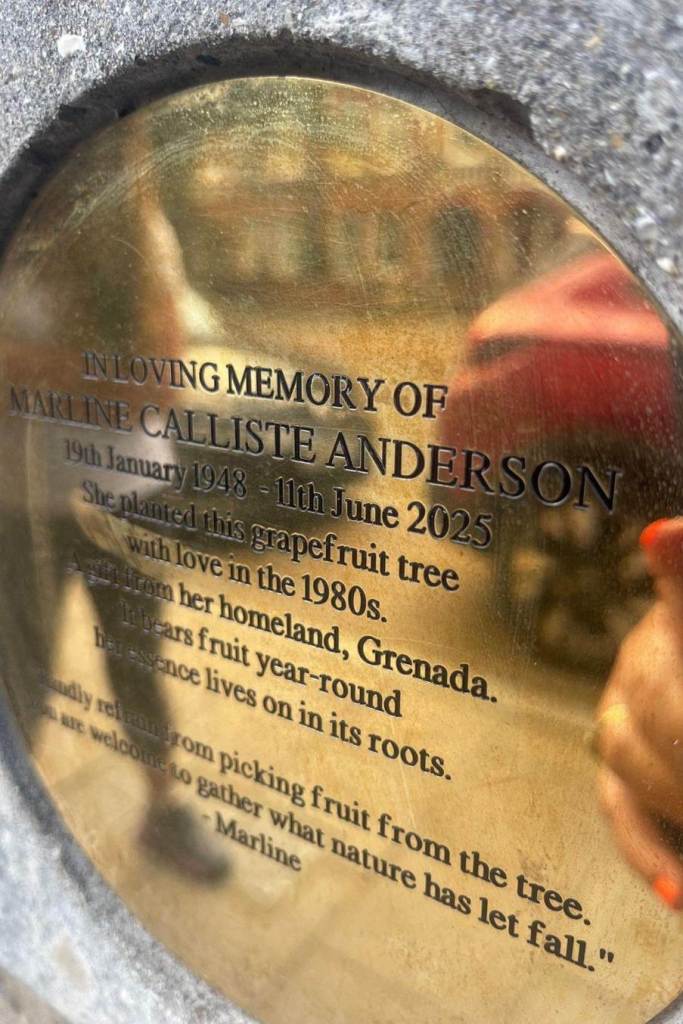
A beautiful example can be found in the heart of the capital on Queenstown Road, a stones throw away from Battersea Power Station. Situated in the front of her former home in London, Marline Calliste Anderson (19th January 1948 – 11th June 2025) planted a grapefruit tree from her homeland Grenada in the 1980s. It is thought to be the only grapefruit tree located in London outside of Kew Gardens. Pictured on the plaque below is a quote from her that says,
“Kindly refrain from picking fruit from the tree. You’re welcome to gather what nature has left fall.” – Marline Calliste Anderson
In the UK, it can be hard to maximise the benefits of nature due to unpredictable weather and limited green space in urban areas. Here at Cultured Health Partners, we want you to get the most out of connecting with nature and offer some tips on how you could go about it to help your wellbeing.
Heal at Home with House Plants
Where outdoor spaces are not close or easily accessible, it is possible to create your own green oasis at home full of aesthetically pleasing plants, or you can have a few functional plants such as air purifiers. My top 3 air purifying plants are:
- Peace Lily (Spathiphyllum) is an elegant plant with beautiful white whipped flowers in low light. They remove toxins like ammonia, benzene, formaldehyde, and trichloroethylene. They can also help reduce indoor mould spores.
- Rubber Plant (Ficus elastica) has large glossy leaves and it thrives in indirect sunlight and captures air borne toxins. It can grow very large and is a statement plant.
- Snake Plant (Sansevieria / Dracaena trifasciata) is a favourite (pictured below) that filters out formaldehyde, benzene, xylene, and releases oxygen at night. It is very durable as it can survive in low light spaces and requires little care, making it an ideal starter plant for beginners.

Find Peace in Parks and Commons
More than half (52%) of people in the UK don’t have access to a public park or common within walking distance (source). To find green spaces nearby start with your local council website to search for parks and outdoor spaces. You can also search the National Trust or Royal Horticultural Society (RHS) websites if you want to make a day of it to explore some of the most well-treasured gardens and green spaces across the country. When it is cold and wet however, exploring outdoor green spaces loses its appeal. However, if you do not mind some mud you can explore wetlands – salt marshes, estuaries, fens, swamps, peat bogs or simply take a daily walk during the day to get some fresh air but wrap up warm.
Nourish Wellbeing with an Allotment
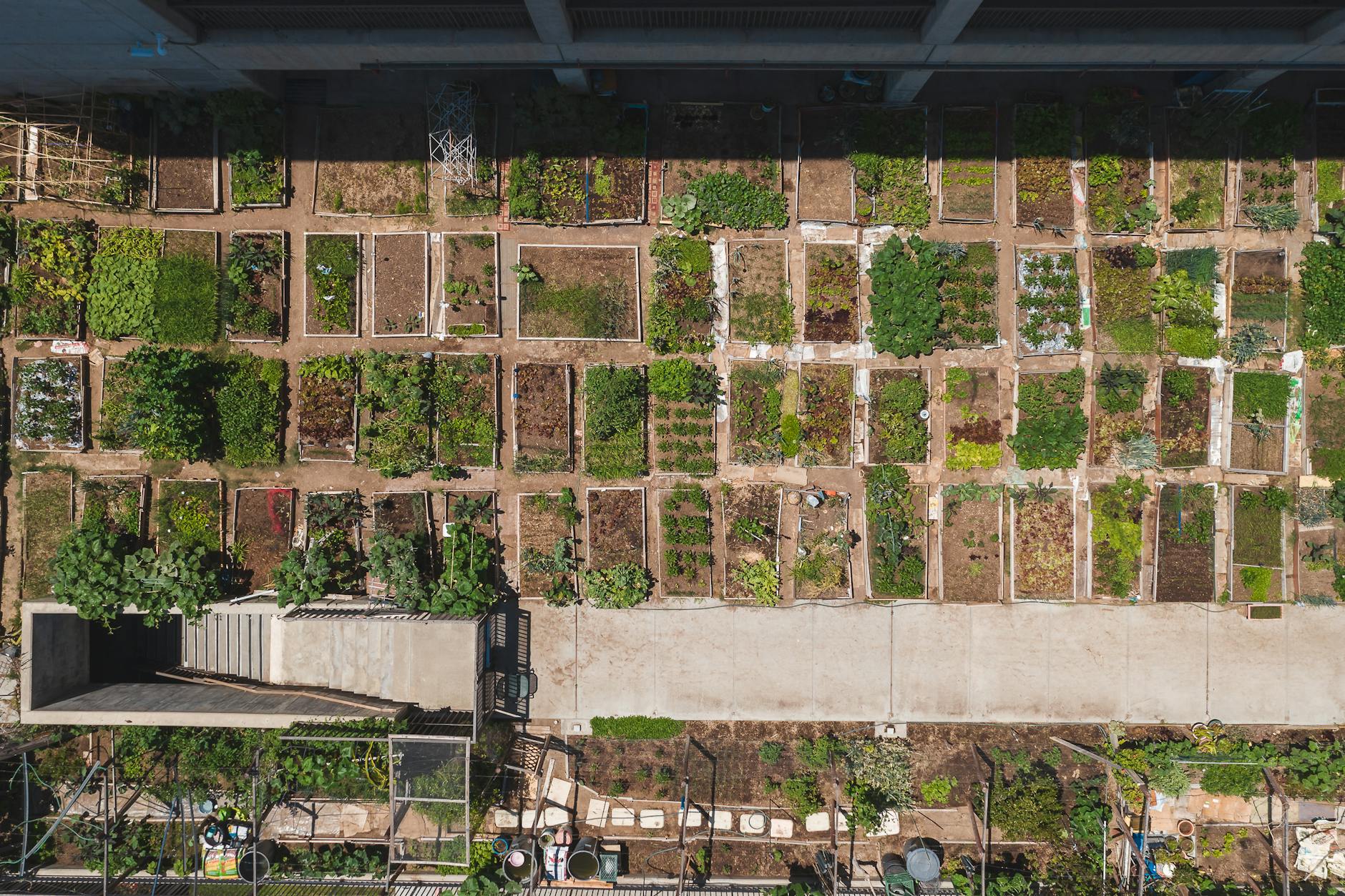
For those living in inner cities, allotments are great spaces for connecting with nature and other locals through growing your own fruit and vegetables. Allotments are small plots of land rented for a small fee, usually from a local council or private landowners. The waiting lists are often lengthy for either local or private allotments, they are under threat given local councils have been granted new powers to sell off allotment land if they are experiencing financial troubles. Nonetheless, they continue to be a great space to enable people from all walks of life to grow their own food.
Feel Grounded Through Gardening
Just because you live in the city without a garden doesn’t mean you can’t get into gardening. Whether it is a sunny windowsill or balcony – you can grow fresh herbs, salad leaves, or a few flowers in pots. If you’ve got a balcony or a doorstep, even better! You can grab a few containers and start small. And if you’re craving more space, community gardens and urban growing projects are a great way to get stuck in, meet people, and learn as you go. Gardening isn’t just for those with big backyards, but it is for anyone with a bit of curiosity, some soil, and a patch of light.
Connect with Culture in Outdoor Exhibitions
Lastly, if you are not feeling green fingered or do not have the desire or time to grow your own, then you can check out amazing outdoor exhibitions particularly through the summer. You can visit RHS Kew Gardens, Eden Project, RHS Chelsea Flower Show, RHS Hampton Court Garden Festival, Tatton Park Flower Show, Blenheim Palace Flower Show, Harrogate Flower Shows and loads more. If you want to try free activities, you can try Kew Gardens Open Community week and check your local area for Community Garden Days & Sessions.
The information provided in this blog is for educational and informational purposes only and is not intended as medical advice. If you have questions about your health, speak to your GP or specialist.
 culturedhealthpartners.co.uk
Leave a comment